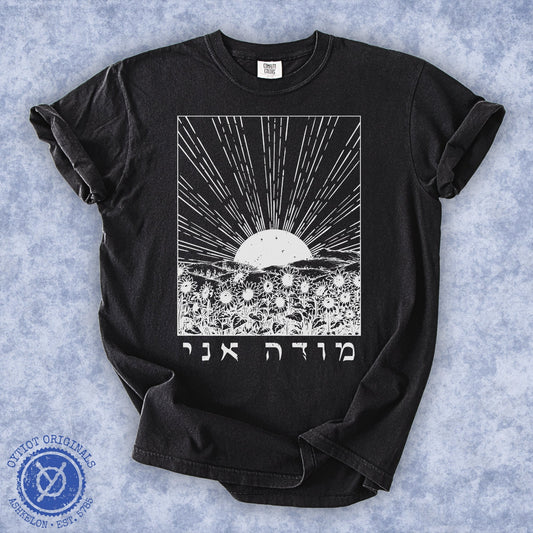
🙏 Modeh Ani – A Morning Whisper of Gratitude
Before the rush of the day begins, before texts, emails, or coffee, there’s a quiet phrase whispered by millions of Jews around the world:
"מודֶה אֲנִי לְפָנֶיךָ מֶלֶךְ חַי וְקַיָּם, שֶׁהֶחֱזַרְתָּ בִּי נִשְׁמָתִי בְּחֶמְלָה, רַבָּה אֱמוּנָתֶךָ."
"I thank You, living and eternal King, for returning my soul to me in compassion. Great is Your faithfulness."
This sentence, known simply as Modeh Ani, is said immediately upon waking, often while still lying in bed, eyes barely open. And yet, its impact can echo through an entire day.
But what exactly is the meaning behind this short sentence? Why is it so powerful? And how can an ancient phrase offer something vital in our modern lives?
Let’s wake up together.
🌄 The First Breath of the Day
Modeh Ani is one of the first prayers taught to children. It’s simple, rhythmic, and comforting. But beneath its simplicity lies a profound spiritual structure.
Unlike most Jewish prayers that mention God’s name, Modeh Ani does not. That’s intentional.
According to Jewish tradition, a person should not speak God's name before washing their hands in the morning. Yet gratitude shouldn’t wait. So, Modeh Ani is designed to be spoken immediately — even in a state of spiritual imperfection.
It reflects a beautiful truth: You don’t need to be “ready” to be thankful. Gratitude can begin the moment you open your eyes.
💫 The Structure of the Soul
Let’s break down the line:
מוֹדֶה אֲנִי לְפָנֶיךָ – I thank You
מֶלֶךְ חַי וְקַיָּם – Living and Eternal King
שֶׁהֶחֱזַרְתָּ בִּי נִשְׁמָתִי בְּחֶמְלָה – For returning my soul to me with compassion
רַבָּה אֱמוּנָתֶךָ – Great is Your faithfulness
The prayer teaches that sleep is a miniature death, and waking up is a spiritual resurrection. Our souls, on some level, leave the body at night and return in the morning by divine kindness.
When we say Modeh Ani, we acknowledge:
-
I am alive.
-
I have a soul.
-
This day is not guaranteed — it is a gift.

🧠 Mindfulness in Ancient Form
Centuries before the word “mindfulness” trended on Instagram, Jewish tradition offered a daily practice of intentional awakening. Modeh Ani is a moment of alignment, heart, soul, and breath - before the distractions of life creep in.
In a world that pushes us to wake up with notifications, noise, and to-do lists, Modeh Ani asks us to start with presence.
Instead of “checking your phone,” try checking your pulse - and whisper:
“Thank you for returning my soul to me.”This quiet pause can anchor your entire day.

🕍 Mystical Dimensions
In Kabbalah (Jewish mysticism), Modeh Ani isn’t just a nice sentiment, it’s a cosmic recalibration.
-
The soul’s journey each night reflects a cleansing process.
-
Its return signals that your purpose for the day isn’t finished.
-
The word “רַבָּה אֱמוּנָתֶךָ” – “Great is Your faithfulness” — implies that God has faith in you. Even when you may not have faith in yourself.
According to the Chassidic masters, this line means:
"If I woke up today, it’s because the world still needs something only I can bring."
Final Thought: Your Soul Has Work To Do Every morning you wake up is not an accident. Modeh Ani invites you to start with thanks, not because everything is perfect — but because you're here. And that alone is enough. So tomorrow morning, before the world pulls you in a hundred directions, take one breath, and say:
"מודה אני לפניך..."
I thank You… for this day, for this soul, for this chance.
❤️ -